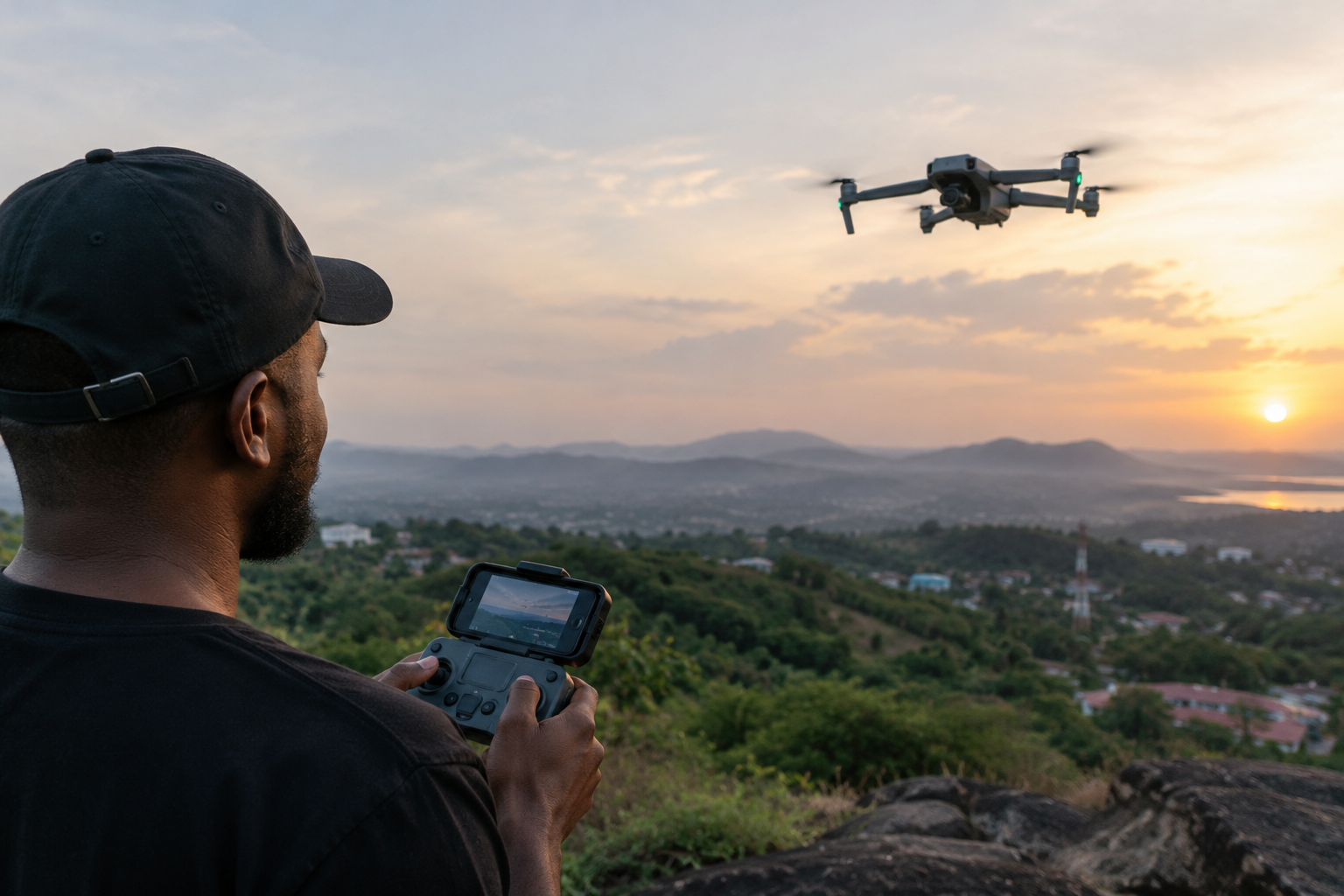
5 Unconventional Ways to Monetize Your Drone in 2026
Owning a drone can be more than a hobby or a way to capture beautiful aerial photographs. With the right equipment, practical skills, and a clear business strategy, you can turn your drone into a tool for providing valuable services to individuals and businesses.
Many drone owners focus on weddings, music videos, and general aerial photography. Although these services can generate income, there are other opportunities worth exploring, particularly for drone operators willing to specialise in solving specific problems.
In Nigeria, where businesses operate across real estate, construction, agriculture, media, and infrastructure, drone technology can support a variety of commercial activities.
The key is to look beyond the drone itself and identify what customers actually need.
Here are five unconventional ways to monetise your drone in 2026, along with practical ideas for finding customers and building a sustainable service business.
━━━━━━━━━━━━━━━━━━━━
1. CREATE PROPERTY DOCUMENTATION PACKAGES FOR REAL ESTATE BUSINESSES
Real estate marketing is one of the more familiar applications of drones. However, you can go beyond taking a few aerial photographs of a house and offer a more comprehensive property documentation service.
Property developers, estate agents, landowners, and property managers may need visual records that help them market, inspect, or document their properties.
A drone can provide useful perspectives that are difficult to capture from the ground.
What Can You Offer?
Depending on your equipment and skills, your service could include:
• Aerial Property Photography: Capture clear overhead and angled views of houses, estates, commercial buildings, and land.
• Property Marketing Videos: Produce short aerial videos for property listings, websites, and social media campaigns.
• Land and Estate Overviews: Create visual presentations showing the layout of a property or development.
• Construction Progress Documentation: Capture periodic images that show how a building project develops over time.
• Property Portfolio Updates: Help property managers maintain current visual records of their assets.
For example, an estate developer preparing to market a new residential project may need photographs and video footage showing the property's layout, surrounding roads, nearby landmarks, and completed buildings.
You could offer a package that combines aerial photography, edited video, and properly organised digital files.
How Can You Find Customers?
Start by identifying real estate companies, property developers, estate agents, and property managers in your area.
Prepare a small portfolio demonstrating what your drone can capture. You can then approach potential clients with a clearly defined service rather than simply advertising that you own a drone.
Consider offering recurring documentation packages to developers who manage projects across several locations.
Business Tip:
Sell a complete visual documentation service, not just flight time. Clients are paying for useful images, reliable delivery, and professional presentation.
━━━━━━━━━━━━━━━━━━━━
2. OFFER CONSTRUCTION PROGRESS MONITORING
Construction projects involve multiple stages, from site preparation and foundation work to structural development and finishing.
Developers, contractors, project managers, and property investors may need regular visual updates to understand what is happening on a site.
Drone photography can help provide these updates without requiring someone to walk through every accessible section of the property.
What Does the Service Involve?
You can work with a construction company to capture images of its site at agreed intervals.
For example, you might document a project every two weeks or once a month, depending on the client's needs.
Your service could include:
• Taking aerial photographs from consistent viewpoints.
• Producing dated photo collections for project records.
• Creating short videos showing visible changes between visits.
• Preparing side-by-side comparisons of different construction stages.
• Organising images into reports for project managers and investors.
Over time, these records can help clients communicate progress to stakeholders and maintain a visual history of the project.
Can You Turn It Into Recurring Income?
Yes, provided you can secure clients who need regular updates.
Instead of charging for a single visit, you could propose a monthly documentation agreement covering a specified number of site visits, deliverables, and editing requirements.
For instance, a contractor managing several projects might need separate progress reports for each site.
The agreement should clearly define:
• Frequency of site visits.
• Image and video delivery deadlines.
• Transportation and travel expenses.
• Editing and reporting requirements.
• Additional services and associated costs.
What Equipment Do You Need?
A drone capable of capturing clear, consistent photographs may be sufficient for basic visual documentation.
More advanced mapping or measurement projects may require suitable mapping equipment, specialised software, ground control, and additional technical expertise.
Do not advertise precise measurements, engineering assessments, or survey-grade results unless you have the appropriate equipment, training, and professional support.
Business Tip:
Consistency is part of the value. Clients are more likely to benefit from progress monitoring when images are captured in a repeatable way and delivered on schedule.
━━━━━━━━━━━━━━━━━━━━
3. PROVIDE AGRICULTURAL IMAGING AND CROP MONITORING SUPPORT
Agriculture offers another potential application for commercial drone services.
Farmers and agricultural businesses may need an overview of their fields, help identifying areas that require closer inspection, or visual records of how their land changes throughout a growing season.
A drone equipped with a suitable camera can support some of these activities.
However, the value depends on the type of drone, the imagery it captures, the crops involved, and the expertise used to interpret the results.
What Services Can You Provide?
Depending on your equipment and capabilities, potential services include:
• Field Photography: Capture aerial images of farms and agricultural properties.
• Crop Growth Documentation: Record visible changes in fields over time.
• Farm Layout Visualisation: Produce aerial views that help agricultural businesses communicate the layout of their land.
• Visible Problem-Area Identification: Help direct attention to sections of a field that may require ground inspection.
• Agricultural Project Documentation: Produce visual records for farm owners, agricultural consultants, and project managers.
For example, a commercial farm may want periodic aerial images to document crop development across different sections of its land.
You could agree on a schedule, capture images from consistent viewpoints, and deliver an organised visual report.
Do You Need a Specialised Drone?
Not every agricultural service requires an expensive agricultural drone.
A standard camera drone may be suitable for basic aerial photography and visual documentation.
However, multispectral imaging, advanced crop analysis, and certain precision-agriculture applications require specialised sensors, appropriate software, and the expertise to interpret the resulting data.
A conventional camera cannot automatically provide the same information as a multispectral sensor.
Similarly, aerial images alone cannot reliably diagnose every crop disease, nutrient deficiency, or irrigation problem.
Where specialised analysis is required, consider partnering with an agricultural consultant or remote-sensing professional.
How Can You Reach Agricultural Clients?
Potential customers include:
• Commercial farms.
• Agricultural consultants.
• Plantation operators.
• Agricultural research projects.
• Organisations supporting farm development.
Begin with a specific service that matches your equipment rather than promising advanced analysis you cannot deliver.
Business Tip:
Focus on helping agricultural clients obtain useful information about their fields. The drone is the collection tool; the quality and usefulness of the final information are what make the service valuable.
━━━━━━━━━━━━━━━━━━━━
4. CREATE DIGITAL MAPS AND VISUAL RECORDS OF LAND
Another opportunity lies in converting aerial images into organised visual records of land and property.
This is different from ordinary aerial photography because the goal may be to create a map, an orthomosaic, a three-dimensional model, or another structured representation of an area.
Such outputs can be useful for construction planning, land development, environmental projects, and other applications that require a visual understanding of a site.
What Can You Produce?
Depending on your equipment, software, training, and the project's requirements, potential deliverables include:
• Aerial site overviews.
• Georeferenced image collections.
• Orthomosaic maps created from overlapping aerial photographs.
• Three-dimensional visual models of suitable sites or structures.
• Visual documentation of land development.
• Repeated aerial records for comparing site conditions over time.
For example, a property developer preparing a large site for development may need a visual record of the land before construction begins.
A suitable drone operator could collect overlapping photographs and process them into a map or model, provided the equipment and workflow meet the project's requirements.
What Should You Know Before Offering Mapping Services?
Not every drone can produce every type of mapping output to the required standard.
Accurate mapping may require:
• A suitable camera.
• Planned image overlap.
• Positioning information.
• Ground control points.
• Specialised processing software.
• Appropriate quality checks.
The accuracy achieved depends on the entire workflow, not simply the drone's advertised camera resolution.
You should also distinguish visual mapping from professional land surveying. Where a project requires legally recognised boundaries, certified survey deliverables, or other regulated professional work, collaborate with appropriately qualified and registered professionals.
How Can You Make Money From This Service?
You could charge for site image collection, data processing, or a clearly defined package covering both.
Potential clients include:
• Construction companies.
• Property developers.
• Engineering consultants.
• Environmental organisations.
• Surveying firms.
Partnering with an established surveying or mapping business may be a practical way to enter the market without immediately investing in every specialised tool.
Business Tip:
If you are new to mapping, begin by learning the workflow and producing sample projects. Do not sell a mapping product until you understand its limitations and can explain what the client will receive.
━━━━━━━━━━━━━━━━━━━━
5. BECOME A SPECIALIST DRONE CONTENT CREATOR FOR BRANDS
Many businesses need visual content for advertising, websites, social media, product launches, and promotional campaigns.
Instead of competing for every type of photography job, you can position yourself as a specialist who produces aerial content for a particular industry.
This approach combines drone operation with creative planning, video editing, and an understanding of how businesses communicate with their audiences.
Which Industries Can You Target?
Consider developing a portfolio for one or two of the following sectors.
Tourism and Hospitality
Hotels, resorts, event venues, and tourism businesses may benefit from aerial footage that showcases their surroundings, outdoor spaces, and facilities.
Automotive Businesses
Car dealerships, automotive brands, and event organisers may use aerial footage in vehicle advertisements, promotional videos, and event coverage.
Agricultural Brands
Agricultural companies may need footage showing farms, agricultural projects, equipment, and field operations.
Commercial Property
Developers, commercial landlords, and property managers may need visual content for presentations, property listings, and corporate communications.
Events and Entertainment
Event organisers, production companies, and entertainment brands may commission aerial footage when the location, permissions, and operating conditions allow it.
How Do You Stand Out From Other Drone Operators?
Start by creating a focused portfolio.
If you want to work with hotels, for example, produce a sample project that demonstrates how aerial footage can present a property and its surroundings.
If you want to serve automotive brands, develop a portfolio that demonstrates controlled camera movement, thoughtful composition, and professional editing.
Your portfolio should show the type of work you want customers to commission.
You can also package your services to make purchasing easier.
A commercial content package might include:
• A pre-production discussion to agree on the client's objectives.
• A planned aerial filming session.
• A specified number of edited video clips.
• Selected high-resolution photographs.
• Versions formatted for agreed advertising or social media channels.
Define the number of revisions, delivery schedule, usage rights, and any additional production costs before accepting the job.
Can You Earn Recurring Income?
Potentially. A brand that regularly publishes promotional content may need new footage for multiple campaigns throughout the year.
You could offer a recurring content agreement with a defined number of production sessions and deliverables.
However, recurring contracts depend on the client's actual needs, your reliability, the quality of your work, and your ability to demonstrate value.
Business Tip:
Do not sell only aerial footage. Offer a creative solution that helps the client communicate a message, present a location, or promote a product.
━━━━━━━━━━━━━━━━━━━━
HOW TO CHOOSE THE BEST DRONE BUSINESS OPPORTUNITY
The best service to offer depends on your drone, experience, location, budget, and access to potential customers.
Use the following questions to narrow your options.
1. What Can Your Current Drone Actually Do?
Review your drone's camera, image quality, flight capabilities, and compatibility with any specialised equipment or software you intend to use.
A drone suitable for promotional photography may not be appropriate for accurate mapping or specialised agricultural analysis.
Start with services that match your existing capabilities.
2. Which Customers Can You Reach?
A technically impressive service will not generate income if you cannot find customers who need it.
Consider the businesses operating around you.
Are there property developers, construction firms, farms, hotels, or marketing agencies that could benefit from your work?
Research their needs before investing heavily in equipment.
3. Can You Demonstrate the Value?
Create sample projects that show what your service delivers.
For construction monitoring, this might be a series of organised site photographs. For commercial content creation, it could be a short promotional video.
Your demonstration should reflect the service you intend to sell.
4. Can the Work Become Repeat Business?
Some projects are one-off assignments, while others may require regular updates.
Construction monitoring, property documentation, and recurring commercial content production can be structured around repeat visits or deliverables when customers have an ongoing need.
Recurring work can help make business planning more predictable, although it is never guaranteed.
5. What Are the Real Operating Costs?
Calculate your expenses before setting your prices.
Include factors such as:
• Transportation and travel time.
• Batteries, charging, and equipment maintenance.
• Insurance and applicable regulatory requirements.
• Editing software and data storage.
• Image processing and other specialised tools.
• Assistants, subcontractors, or professional partners.
• Time spent planning, communicating with clients, and preparing deliverables.
Your price should reflect the full service, not just the time spent in the air.
━━━━━━━━━━━━━━━━━━━━
IMPORTANT: UNDERSTAND NIGERIA'S DRONE REGULATIONS
Before accepting paid drone work in Nigeria, confirm which aviation approvals, registrations, pilot qualifications, and operational permissions apply to your proposed activity.
The Nigeria Civil Aviation Authority (NCAA) publishes information about remotely piloted aircraft system certification and the requirements for organisations conducting commercial drone operations.
You should not assume that owning a drone, keeping a flight below a particular height, or using a lightweight drone automatically permits commercial operations.
Depending on the activity, location, and operating conditions, additional approvals or restrictions may apply.
Always verify the current requirements with the relevant authorities before undertaking a commercial flight.
You can begin with the NCAA's official information on Remotely Piloted Aircraft System Certification Services:
https://www.ncaa.gov.ng/services/airworthiness/remotely-piloted-aircraft-system-certification-services/
Also consider privacy, property access, site security, and the handling of images containing identifiable people or private locations.
━━━━━━━━━━━━━━━━━━━━
FINAL THOUGHTS
Your drone can be more than a device for taking photographs or recording videos. It can become part of a specialised service business when you identify a genuine customer need and build the skills required to meet it.
Property documentation, construction progress monitoring, agricultural imaging, digital mapping, and specialist commercial content creation are five opportunities worth investigating in 2026.
You do not need to pursue all five.
Start with one service that matches your current equipment and experience.
• Research potential customers.
• Create a strong portfolio.
• Calculate your operating costs.
• Develop a clear service offer.
• Build relationships with potential clients.
As your skills and customer base grow, you can expand into more specialised services or collaborate with professionals who bring complementary expertise.
At REVID, we believe that understanding drone technology includes recognising its practical applications beyond recreational flying. Whether you are exploring your first drone or expanding an existing operation, choosing suitable equipment for your intended work is an important first step.
Explore the available options in the REVID drone products section:
https://www.revid.ng/products
The real opportunity is not simply owning a drone. It is knowing how to use it to solve a problem that someone is willing to pay to have solved.
━━━━━━━━━━━━━━━━━━━━
FREQUENTLY ASKED QUESTIONS
1. Can I Make Money With a Drone in 2026?
Yes. Potential commercial applications include property photography, construction documentation, agricultural imaging, mapping, and promotional content creation. Your earning potential depends on customer demand, your skills, operating costs, equipment, and applicable regulations.
2. What Is the Most Profitable Drone Business?
There is no single drone business that is guaranteed to be the most profitable. Specialised mapping, recurring construction documentation, commercial filming, and other services may offer opportunities, but profitability depends on your market, expenses, expertise, and ability to secure clients.
3. Can I Start a Drone Business With the Drone I Already Own?
Possibly. If your drone can produce the image quality and deliverables your intended customers need, you may be able to begin with basic photography or visual documentation. Advanced mapping and specialised agricultural work may require additional equipment, software, training, or professional partnerships.
4. How Do I Find Clients for My Drone Business?
Build a portfolio, identify businesses that need your service, contact relevant decision-makers, and present a clear offer.
You can also develop relationships with property developers, construction companies, marketing agencies, farms, and other professionals who may need aerial services.
5. Is Commercial Drone Flying Legal in Nigeria?
Commercial drone operations are regulated in Nigeria. The applicable requirements depend on the operation and its circumstances. Before accepting paid work, verify the current NCAA requirements and obtain the approvals applicable to your activity.
6. Do I Need an Expensive Drone to Start Earning Money?
Not necessarily. Some photography and content creation services can be delivered with suitable consumer drones. However, the equipment must meet the client's requirements, and specialised services may require more advanced systems or additional technical expertise.
7. Should I Charge Clients Per Flight or Per Project?
Either approach may work, depending on the service.
Project-based pricing can be useful when the client needs a defined set of deliverables, while recurring agreements may suit ongoing construction monitoring or content production.
In either case, account for travel, planning, editing, equipment maintenance, and other costs.
Business15 min read
5 Unconventional Ways to Monetize Your Drone in 2026
Discover five unconventional ways to make money with a drone in 2026, from real estate documentation and construction monitoring to agricultural imaging, digital mapping, and specialised content creation. Learn how to identify potential clients, package your services, and turn your drone into a business asset.
Revid•