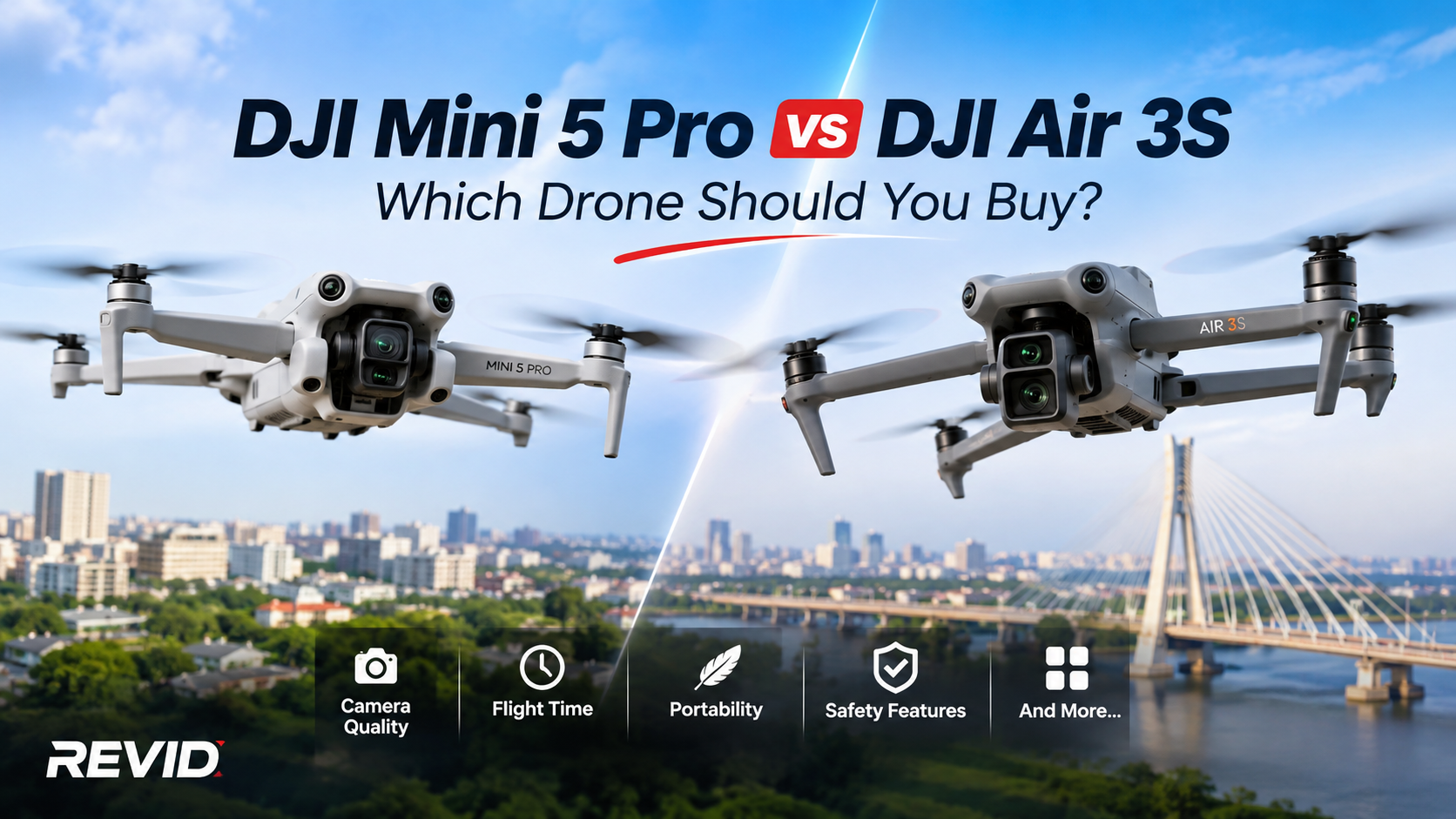
DJI Mini 5 Pro vs DJI Air 3S: Which Drone Should You Buy?
Choosing between the DJI Mini 5 Pro and DJI Air 3S can be challenging, especially if you want excellent aerial photography, professional-quality video and reliable flight performance.
Both drones belong to DJI's advanced camera drone lineup, but they are designed with slightly different priorities.
The DJI Mini 5 Pro focuses on portability, advanced imaging and convenience in a compact aircraft. The DJI Air 3S, on the other hand, offers a dual-camera system, longer standard flight time and additional creative flexibility for professional aerial photography.
So, which one should you buy?
In this detailed comparison, we examine their cameras, flight performance, obstacle avoidance, battery life, transmission systems and practical applications to help you make an informed decision.
DJI Mini 5 Pro vs DJI Air 3S: Specifications Comparison
Before looking at their individual features, here is a breakdown of their major specifications.
DJI Mini 5 Pro
Takeoff Weight: Approximately 249.9g, with a stated tolerance of ±4g.
Main Camera: 1-inch CMOS.
Main Camera Resolution: 50MP.
Secondary Camera: Not available.
Maximum Video Resolution: 4K at 120fps.
Maximum Flight Time: 36 minutes with the standard battery.
Extended Battery Flight Time: Up to 52 minutes.
Obstacle Avoidance: Omnidirectional sensing with forward-facing LiDAR.
Transmission System: DJI O4+.
Internal Storage: 42GB.
Maximum Wind Resistance: 12m/s.
DJI Air 3S
Takeoff Weight: Approximately 724g.
Main Camera: 1-inch CMOS.
Main Camera Resolution: 50MP.
Secondary Camera: 48MP, 1/1.3-inch CMOS.
Secondary Camera Focal Length: 70mm equivalent.
Maximum Video Resolution: 4K at 120fps.
Maximum Flight Time: 45 minutes.
Obstacle Avoidance: Omnidirectional sensing with nightscape obstacle sensing.
Transmission System: DJI O4.
Internal Storage: 42GB.
Maximum Wind Resistance: 12m/s.
Specifications are based on DJI's published product information. Maximum flight times are laboratory figures and should not be considered guaranteed real-world performance.
Camera Quality: Which Drone Takes Better Pictures?
Winner: DJI Air 3S
Both drones feature a 1-inch CMOS main camera with 50MP effective pixels and an f/1.8 aperture.
This gives both aircraft an impressive foundation for capturing detailed aerial photographs and high-quality video.
However, the Air 3S has an important advantage: a second camera.
DJI Mini 5 Pro Camera
The Mini 5 Pro features a 1-inch CMOS sensor, 50MP effective photo resolution, a 24mm equivalent focal length and an f/1.8 aperture.
It supports 4K video recording at up to 120fps and offers 10-bit D-Log M and HLG colour profiles.
Its camera is particularly useful for landscape photography, real estate footage, travel videos and cinematic aerial shots.
Its compact design also makes it easier to carry when travelling between shooting locations.
DJI Air 3S Camera
The Air 3S features two cameras.
Its wide-angle camera uses a 1-inch CMOS sensor with 50MP effective pixels, a 24mm equivalent focal length and an f/1.8 aperture.
Its second camera is a medium telephoto camera featuring a 1/1.3-inch CMOS sensor, 48MP effective pixels, a 70mm equivalent focal length and an f/2.8 aperture.
The additional 70mm camera is particularly useful for capturing distant subjects, architectural details, vehicles and cinematic compositions.
It allows pilots to achieve a different perspective without physically moving the aircraft closer to the subject.
Camera Verdict
Although both drones have impressive main cameras, the Air 3S offers greater creative flexibility because of its additional telephoto camera.
For photographers and videographers who frequently need different focal lengths, the Air 3S is the stronger choice.
The Mini 5 Pro remains an excellent option if you primarily use a wide-angle camera.
Video Recording: Which Is Better for Cinematic Footage?
Winner: Tie
Both drones support 4K recording at up to 120fps.
This gives them excellent capabilities for cinematic video production and slow-motion footage.
They also support 10-bit recording options, including D-Log M and HLG, which provide greater flexibility during colour grading.
The Mini 5 Pro is particularly attractive for creators who want professional-quality footage without carrying a larger drone.
The Air 3S offers an additional advantage through its dual-camera arrangement.
For example, you can capture a wide establishing shot of a building using the main camera and then switch to the 70mm camera to capture a tighter composition.
This is particularly useful when producing real estate promotional videos, travel documentaries, event coverage, automotive videos and commercial advertisements.
Both deliver excellent video quality. The Air 3S offers more shooting versatility, while the Mini 5 Pro delivers impressive capabilities in a smaller aircraft.
Portability and Weight
Winner: DJI Mini 5 Pro
This is one of the biggest differences between the two drones.
The DJI Mini 5 Pro has an official takeoff weight of approximately 249.9g, with DJI noting that actual weight may vary by approximately 4g.
The DJI Air 3S weighs approximately 724g.
That is a substantial difference.
Why Does Weight Matter?
A lighter drone is generally easier to transport, carry and deploy.
The Mini 5 Pro is particularly convenient for travel photographers, content creators, social media videographers, outdoor enthusiasts and independent drone operators.
The Air 3S is still a foldable and portable drone, but it requires more space and weighs considerably more.
For people who frequently travel between locations, the Mini 5 Pro has a clear advantage.
One important consideration for Nigerian pilots is that being under 250g does not automatically exempt a drone from every applicable aviation requirement. Always check the relevant Nigerian regulations before flying.
Flight Time and Battery Performance
Winner: DJI Air 3S for standard battery flight time.
Battery life is another important consideration when purchasing a drone.
The DJI Air 3S offers a maximum advertised flight time of 45 minutes.
The Mini 5 Pro offers up to 36 minutes with its standard Intelligent Flight Battery and up to 52 minutes with the Intelligent Flight Battery Plus.
This means the Mini 5 Pro can actually exceed the Air 3S's advertised maximum flight time when using its extended battery.
However, there is an important distinction.
The 52-minute figure requires the larger Battery Plus, which changes the aircraft's weight and may affect applicable operating classifications in some jurisdictions.
Actual flight time will also depend on wind, temperature, flying speed, recording settings and battery condition.
For professional operations, having additional batteries is often more useful than relying entirely on the maximum advertised flight time.
Obstacle Avoidance and Flight Safety
Winner: Tie
Both drones offer advanced omnidirectional obstacle sensing.
This allows them to detect obstacles in multiple directions and helps reduce the risk of collisions during flight.
DJI Mini 5 Pro
The Mini 5 Pro uses omnidirectional binocular vision sensing, forward-facing LiDAR and a downward infrared sensor.
Its forward-facing LiDAR provides additional sensing capabilities, particularly useful in low-light environments.
DJI Air 3S
The Air 3S features omnidirectional vision sensing, forward-facing LiDAR for nightscape obstacle sensing and advanced Smart Return-to-Home functionality.
Its nightscape sensing capabilities make it particularly useful for pilots who work in challenging lighting conditions.
However, obstacle avoidance is not a guarantee against collisions.
Thin wires, transparent surfaces, poorly illuminated objects and other difficult-to-detect obstacles can still present risks.
Pilots should always maintain visual awareness of their surroundings and avoid depending entirely on automated safety systems.
Transmission and Signal Performance
Winner: DJI Mini 5 Pro on paper.
The Mini 5 Pro uses DJI's O4+ transmission system, while the Air 3S uses DJI O4.
Both systems offer impressive video transmission capabilities.
Under FCC testing conditions, DJI publishes maximum transmission distances of up to 20km for both aircraft.
However, the Mini 5 Pro uses the newer O4+ system.
Its transmission performance is designed to provide reliable communication between the aircraft and compatible remote controllers.
Actual signal performance depends on environmental interference, physical obstructions, antenna positioning and regional transmission restrictions.
In urban environments, buildings and wireless interference can significantly reduce practical transmission distance.
For Nigerian pilots, it is important to remember that advertised transmission distances are laboratory measurements, not recommended operating distances.
Which Drone Is Better for Professional Work?
Winner: DJI Air 3S
Both drones can handle professional aerial photography and videography.
However, the Air 3S offers additional capabilities that make it particularly attractive for commercial creative work.
Its dual-camera system provides greater flexibility when shooting different subjects.
Real Estate Photography
The wide-angle camera can capture entire properties, while the 70mm camera can isolate architectural details.
Event Videography
The additional focal length allows pilots to capture tighter compositions without flying too close to subjects.
Travel Filmmaking
The dual-camera system provides more options for creating varied visual sequences.
Commercial Advertising
The combination of wide and telephoto perspectives makes the Air 3S suitable for producing more diverse promotional content.
The Mini 5 Pro is not necessarily less professional.
Its lightweight design, 1-inch sensor, advanced obstacle sensing and excellent video capabilities make it a powerful tool for independent creators and aerial photographers.
For operators who prioritise portability, it can be the more practical business investment.
Which Drone Is Better for Beginners?
Winner: DJI Mini 5 Pro
For someone purchasing their first advanced camera drone, the Mini 5 Pro is an attractive starting point.
Its lightweight construction makes it easier to transport, while its advanced sensing systems, intelligent flight features and high-quality camera provide room to develop piloting and photography skills.
The Air 3S is also suitable for beginners who are willing to learn with a larger and heavier aircraft.
However, its additional camera capabilities may be more than some first-time pilots actually need.
The best choice depends on your budget, intended use and willingness to invest time in learning proper drone operation.
DJI Mini 5 Pro vs DJI Air 3S: Feature-by-Feature Winners
Main Camera Sensor: Tie.
Overall Camera Versatility: DJI Air 3S.
Video Recording: Tie.
Telephoto Photography: DJI Air 3S.
Portability: DJI Mini 5 Pro.
Standard Battery Flight Time: DJI Air 3S.
Extended Battery Flight Time: DJI Mini 5 Pro.
Obstacle Avoidance: Tie.
Transmission Technology: DJI Mini 5 Pro.
Professional Creative Flexibility: DJI Air 3S.
Beginner-Friendly Portability: DJI Mini 5 Pro.
Travel Convenience: DJI Mini 5 Pro.
Which Drone Should You Buy in Nigeria?
Your decision should depend on what you intend to do with the drone.
Buy the DJI Mini 5 Pro if:
You travel frequently and need a lightweight drone.
You create content for Instagram, TikTok and YouTube.
You want excellent aerial photography without carrying a larger aircraft.
You prefer a compact drone with advanced safety features.
You want a capable drone for everyday creative work.
Buy the DJI Air 3S if:
You need two different camera perspectives.
You regularly produce professional aerial videos.
You work in real estate photography and commercial filmmaking.
You want greater flexibility when capturing distant subjects.
You prioritise camera versatility over portability.
What About Pricing?
Drone prices in Nigeria can vary depending on the seller, exchange rates, importation costs, available stock and package configuration.
The Fly More Combo, controller type, battery options and included accessories can also affect the final purchase price.
Rather than relying on outdated international prices converted directly into naira, compare the actual package prices available from reputable Nigerian suppliers.
You can explore available drone models through REVID's drone collection.
Final Verdict: DJI Mini 5 Pro or DJI Air 3S?
Both drones are excellent, but they serve slightly different purposes.
The DJI Mini 5 Pro is an impressive compact drone that combines a 1-inch camera sensor, advanced obstacle sensing, 4K/120fps recording and exceptional portability.
The DJI Air 3S takes things further with its dual-camera system, longer standard flight time and additional creative possibilities.
If portability, travel convenience and everyday content creation are your priorities, the Mini 5 Pro is an excellent choice.
If you want more camera versatility and intend to undertake demanding professional photography and videography projects, the Air 3S is worth the additional investment.
Our Recommendation
The DJI Mini 5 Pro is the better all-round compact drone, while the DJI Air 3S is the better choice for professional creative flexibility.
Ultimately, the best drone is not necessarily the most expensive one. It is the aircraft that delivers the capabilities your work actually requires.
At REVID, we believe choosing the right drone starts with understanding what you want to achieve.
Whether you are purchasing your first drone or upgrading your aerial equipment, our goal is to help you make an informed decision.
Explore REVID for premium drones, creator equipment and professional aerial solutions.
Frequently Asked Questions
1. Is the DJI Mini 5 Pro better than the DJI Air 3S?
It depends on your priorities. The Mini 5 Pro is better for portability and compact operation, while the Air 3S offers greater camera versatility through its dual-camera system.
2. Does the DJI Mini 5 Pro have the same camera sensor as the Air 3S?
Both have a 1-inch CMOS main camera with 50MP effective pixels. However, the Air 3S also has an additional 48MP medium tele camera.
3. Which drone has a longer flight time?
The Air 3S offers up to 45 minutes with its standard battery. The Mini 5 Pro offers up to 36 minutes with its standard battery or up to 52 minutes with the Battery Plus.
4. Can the DJI Air 3S shoot 4K at 120fps?
Yes. The Air 3S supports 4K video recording at up to 120fps. The Mini 5 Pro offers the same maximum 4K frame rate.
5. Is the DJI Mini 5 Pro under 250g?
Its published takeoff weight is approximately 249.9g, although DJI states that actual weight may vary by approximately 4g. Battery configuration and accessories can also affect operating weight.
6. Which drone is better for real estate photography?
The Air 3S has an advantage because of its additional 70mm medium tele camera. However, the Mini 5 Pro is also capable of capturing high-quality real estate footage and photographs.
7. Which drone is better for travelling?
The Mini 5 Pro is the better travel companion because of its significantly lower weight and compact design.
8. Can beginners use the DJI Air 3S?
Yes. Beginners can use the Air 3S, but they should learn the controls, safety procedures and flight modes before attempting complex operations.
9. Is the DJI Mini 5 Pro good for professional video production?
Yes. Its 1-inch CMOS sensor, 4K/120fps recording and 10-bit colour profiles make it capable of producing high-quality footage for professional creative projects.
10. Where can I buy DJI drones in Nigeria?
You can explore available drone options through REVID. Choosing a reliable supplier is important for product authenticity, appropriate accessories and after-sales support.
UAV Insights12 min read
DJI Mini 5 Pro vs DJI Air 3S: Which Drone Should You Buy?
Choosing between the DJI Mini 5 Pro and DJI Air 3S? We compare their cameras, flight performance, obstacle avoidance, battery life, portability and features to help you decide which drone offers the best value for your photography, videography and professional aerial operations.
Revid•
Keep Reading
More from UAV Insights
UAV Insights
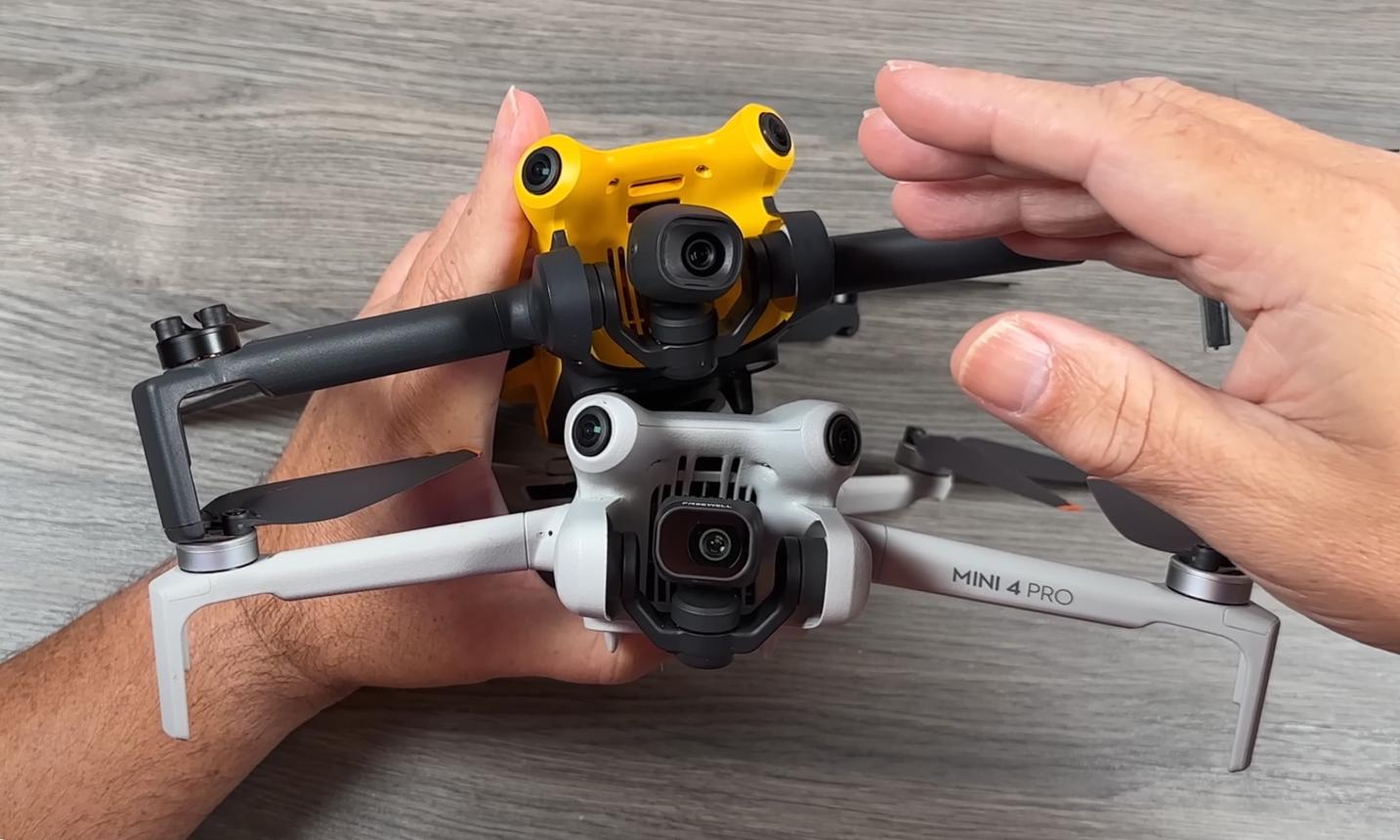
Is Skyrover Owned by DJI? Uncovering the Truth Behind the Similarities
Skyrover drones look remarkably similar to DJI's Mini series, raising questions about their origins and ownership. Discover what is known about Skyrover's founders, its similarities with DJI, and whether the two companies are actually connected.
Read Article →
UAV Insights
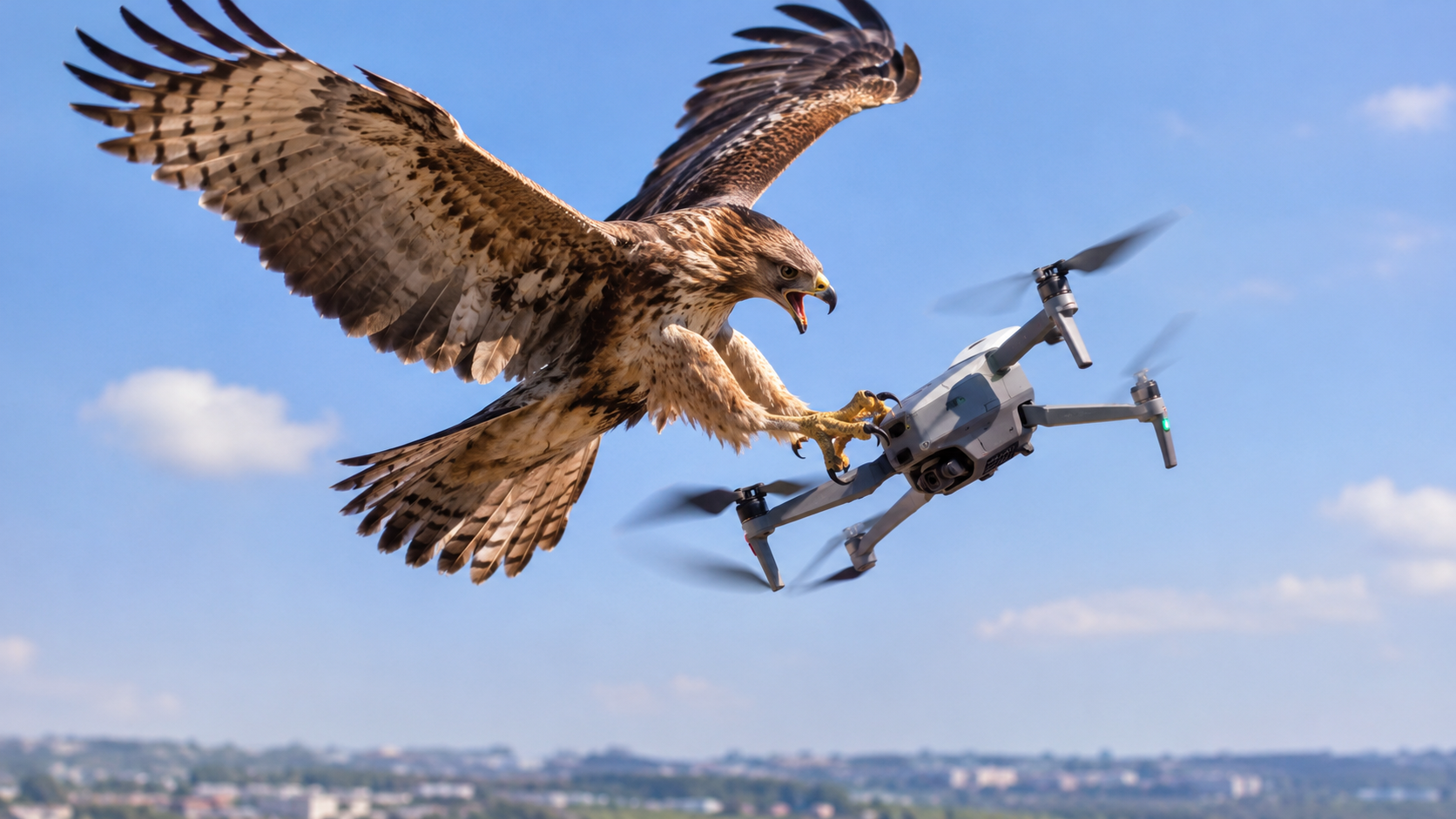
What Can Make You Lose Your Drone? 10 Common Causes Every Pilot Should Know
Bird attacks, damaged propellers, battery failure, signal loss and bad weather can turn an ordinary flight into a lost drone. Discover 10 common causes of drone loss and how to reduce the risk of losing your aircraft.
Read Article →